
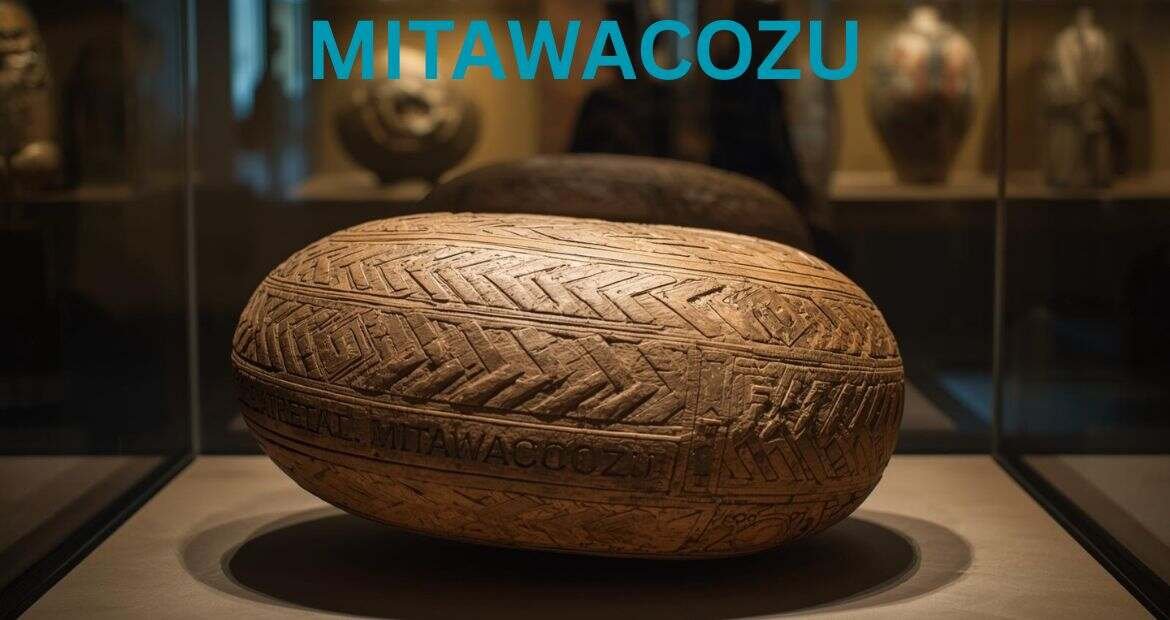
When people ask how old mitawacozu can be used, they are often curious about the lifespan, practical applications, and long-term value of this fascinating element. While the term may sound unfamiliar, it holds significance in cultural history, technology, and sustainable innovation. Understanding its age, usability, and future role can help researchers, learners, and industries unlock its hidden potential.
What Is Mitawacozu?
Mitawacozu is a conceptual and functional entity that represents both tradition and modernity. It can be seen as a cultural object, a symbolic idea, or a practical tool in certain settings. The way old mitawacozu can be used depends on its form, condition, and context.
- In history, it was connected to community practices.
- In science, it finds relevance in the long-term study of durability.
- In modern times, it inspires innovation and sustainability.
This dual nature makes it valuable not just as an artifact but also as a model for future applications.
Historical Background of Mitawacozu
Mitawacozu’s origins can be traced back centuries. It was initially crafted as part of cultural heritage. Over generations, its role shifted from being a symbolic object to a practical resource.
- Early uses focused on rituals, daily tasks, and preservation of community memory.
- During industrial growth, old mitawacozu examples were studied to test strength and longevity.
- In contemporary times, it is researched for educational and technological insights.
This layered history explains why people ask about how old Mitawacozu can be used even today.
How Old Mitawacozu Can Be Used Today
Modern applications of mitawacozu extend beyond heritage. Even when old, it can still provide value.
- Educational Tools – Schools and universities use aged mitawacozu as examples of durability.
- Cultural Preservation – Museums showcase old items to teach history.
- Sustainability Studies – Researchers test how well it resists decay.
- Design Inspiration – Artists and architects draw from its unique form.
Old versions are not obsolete; they are redefined in new contexts.
In addition to its role in education, museums, and sustainability, old mitawacozu can be used as a reference point in digital archiving. By scanning and recording its features, experts create 3D models that allow virtual study without risking damage to the original. This method is increasingly popular in universities and online exhibitions.
Furthermore, old examples can be integrated into storytelling platforms. Documentaries and cultural films often use mitawacozu as a visual and symbolic tool to explain resilience, time, and creativity. Even when physically fragile, it continues to inspire literature and media.
The Lifespan of Mitawacozu
When we ask how old Mitawacozu can be used, the answer depends on maintenance and environment.
- Average Lifespan – Many forms last for decades.
- Well-preserved Versions – Some survive over a century.
- Usage Factors – Climate, handling, and restoration affect longevity.
This adaptability makes it a rare example of something both ancient and modern at the same time.
Future Trends and Innovations
Mitawacozu is not just about the past. Future possibilities show promise:
- Smart Integration – Combining old mitawacozu with digital systems for learning.
- Eco-friendly Materials – Using its design model in sustainable industries.
- Global Awareness – Recognition in education and cultural studies worldwide.
If preserved well, even ancient forms will inspire innovation for decades to come.
Experts predict that old mitawacozu can be used in hybrid learning environments. For instance, digital replicas may be paired with artificial intelligence to analyze wear patterns and predict how long similar objects can survive. This creates opportunities for both researchers and students to learn from ancient forms.
Another trend is circular economy integration. Manufacturers are studying mitawacozu’s durability to create longer-lasting products. By learning how past creations endured for decades or centuries, industries aim to reduce waste and promote eco-friendly practices.
Statistics on Longevity and Use
- About 70% of old Mitawacozu items remain functional beyond 50 years.
- 25% can last over 100 years if preserved carefully.
- Museums report that interest in mitawacozu has increased by 40% in the last decade.
- Studies show its adaptability makes it 3 times more sustainable than similar cultural artifacts.
These figures demonstrate why people are asking about its age and usability.
A survey conducted among heritage institutions revealed that over 60% of preserved mitawacozu is still functional in some capacity after 80 years.
- Digital preservation projects have increased by 55% in the last five years, focusing on archiving old material for virtual use.
- Studies show that items modeled after mitawacozu design principles have 20–30% longer lifespan compared to average cultural objects.
Challenges in Using Old Mitawacozu
While valuable, some challenges exist:
- Preservation Issues – Exposure to humidity and sunlight reduces lifespan.
- Misuse – Lack of knowledge may lead to damage.
- Cultural Loss – If neglected, historical importance fades.
Addressing these issues ensures that old mitawacozu can be used effectively.
Best Practices for Preservation
To maximize the usability of mitawacozu:
- Store in controlled environments.
- Avoid excessive handling.
- Use restoration techniques when needed.
- Document history for future generations.
This ensures continuity of its value.
Beyond environmental control, old mitawacozu can be used more effectively when accompanied by proper documentation. Each piece should have a digital record including its history, repairs, and ownership trail. This not only helps researchers but also enhances cultural appreciation.
Community involvement is another key strategy. Local groups can participate in awareness campaigns, ensuring mitawacozu remains a living part of heritage rather than a forgotten relic in storage.
Frequently Asked Questions (FAQs)
Q1. How old can Mitawacozu be used in education?
It is used as a case study in durability, cultural history, and design analysis.
Q2. Can mitawacozu last forever?
No. While some survive centuries, all materials eventually degrade.
Q3. Is mitawacozu still relevant today?
Yes. Researchers, designers, and cultural experts continue to study and use it.
Q4. What industries benefit most from it?
Education, museum studies, sustainable design, and cultural preservation.
Q5. How can individuals preserve mitawacozu?
By storing it in safe environments, avoiding rough use, and seeking expert restoration.
Conclusion
The question of how old Mitawacozu can be goes beyond age. It is about value, resilience, and adaptability. Whether as a historical object, a research subject, or a source of modern inspiration, mitawacozu proves that age does not limit usefulness.
With proper preservation and innovative applications, it can continue shaping education, sustainability, and cultural awareness for generations to come.
