
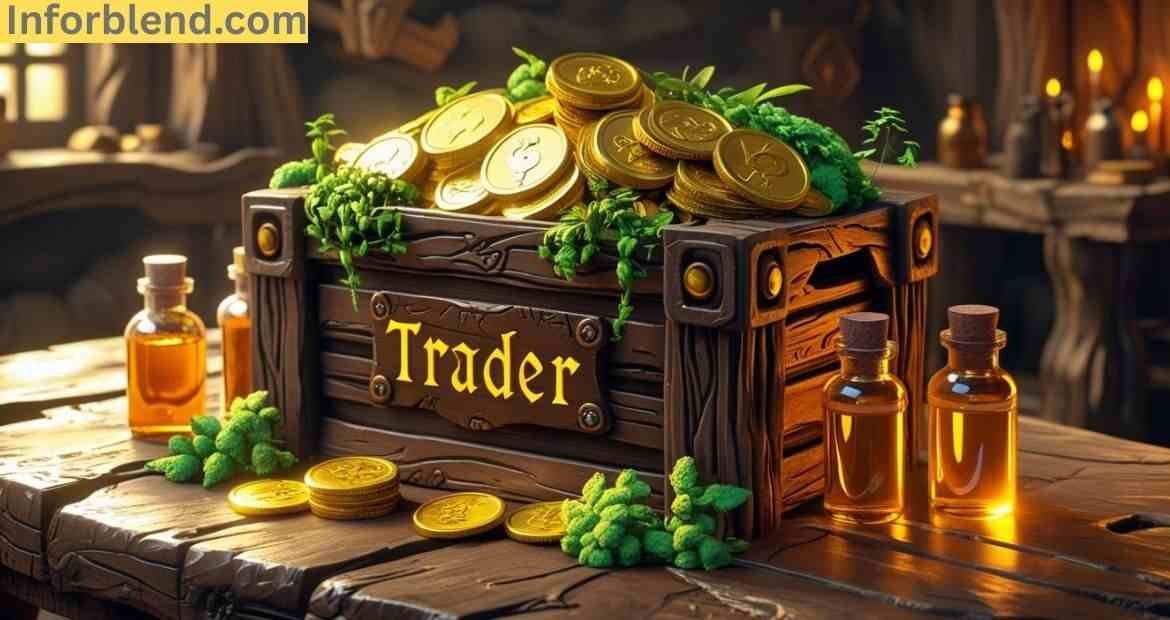
If you play Melvor Idle, you’ve probably heard the buzz around trader crate melvor discussions—especially among Township and economy-focused players. A Trader Crate is an “openable” item that contains a small bundle of randomized rewards. Think of it as a miniature treasure chest tuned for resource efficiency, account progression, and a little bit of risk-reward excitement.
Unlike combat loot bags, Trader Crates live at the intersection of resource management and economic optimization. They’re popular because they convert time, materials, or trading actions into a compressed, RNG-based payout that can accelerate skilling or generate gold, depending on what you pull.
Why Players Care: Three Core Benefits
- Resource Compression: You transform a broad mix of inputs (time, Township production, trading actions) into a single openable. That makes planning simpler.
- Account Acceleration: Crates can drop items that shortcut grinds, unlock new loops, or boost skilling.
- Gold & Materials: Even when your luck isn’t sizzling, crates often translate to steady GP or crafting inputs you can reinvest.
A Short History of Crates and the “Trader” Theme
Melvor Idle began as a minimalist idle homage to classic RPG loops and steadily expanded into a full ecosystem with skills, bosses, and a deep economy. As Township and related features matured, “box” and “crate” mechanics emerged to bundle rewards and gamify resource exchange. The “Trader” flavor reflects Melvor’s growing emphasis on non-combat progression—giving players more ways to win the idle game without relying only on dungeons or thieving.
Over time, crates have been tuned for balance: requirements, access, and expected value (EV) have shifted to fit new content and prevent trivial exploits. The Trader Crate sits in that lineage—useful, flexible, and designed to make economy play feel rewarding.
How Trader Crates Fit Into Your Account
Early–Mid Game
- Bridging gaps: Use crates to smooth resource spikes—like when you’re short on a specific bar, herb, or food tier.
- Time efficiency: If your playstyle relies on Township or passive production, crates convert idle output into actionable progress.
Late Game
- EV farming: You’ll open larger volumes and pay attention to gold per hour (GPH) and bank space.
- Targeted progress: Crates complement specialized loops (e.g., potion crafting, mastery pushes) by feeding you just-in-time mats.
Mechanics, Without the Jargon
- Crates are openables: Use them from your bank.
- RNG tables: Each crate type has a drop table with different categories (resources, consumables, gold, etc.).
- Account modifiers apply: Global modifiers (like item quantity bonuses, mastery effects, or Township perks) can influence the total value you realize—even if they don’t directly alter a crate’s roll, they amplify what you can do with the outputs.
- The real value is downstream: The payout’s worth depends on what you craft or sell afterward.
The Smart Way to Evaluate a Trader Crate (EV 101)
You don’t need exact drop percentages to reason about value. Use a simple framework:
- List Typical Outcomes: What categories does the crate usually contain (ores, bars, herbs, potions, GP, etc.)?
- Assign Local Values:
- Sell Value (SV): Straight gold from selling items.
- Crafted Value (CV): The downstream value after turning the drop into something better (e.g., bars → gear, herbs → potions).
- Opportunity Cost (OC): What you “paid” in time/resources to get the crate.
- Sell Value (SV): Straight gold from selling items.
- Expected Value (EV):
- EV ≈ (Σ probability × realized value of each outcome) – OC
- Realized value = max(SV, CV) for each drop, based on your account.
- EV ≈ (Σ probability × realized value of each outcome) – OC
Rule of Thumb: If EV is positive and the GPH beats your next-best activity (after accounting for idle time and bank trips), the crate loop is efficient for you.
Practical Strategies for Better Returns
1) Don’t Hoard Forever—Batch Smartly
Open in reasonable batches so you can:
- Quickly recognize streaky luck and stop if EV dips below your alternative activity.
- Convert outputs into the next planned craft without clogging your bank.
2) Monetize the Middle
Many crate drops shine after crafting. For example, turning basic inputs into mid-tier consumables can multiply value. Sell finished goods when market-like mechanics or gold needs align with your goals.
3) Sync With Township
If your account is Township-heavy, align crate usage with your Township production cycles. When storage is full, turn surplus into crates, then open to refuel bottleneck skills.
4) Respect Bank Space
Crates are tiny before opening, bulky after. Keep a bank tidy routine, open, craft, sell, stash—then repeat.
5) Track Your Own EV
Even a simple spreadsheet is enough. Record: batch size, notable drops, gold gained, items crafted, time elapsed. Over 3–5 batches, you’ll see whether Trader Crates are outperforming your alternatives.
Common Mistakes (and Easy Fixes)
- Mistake: Opening crates with no plan.
Fix: Decide in advance which drops you’ll craft vs. sell. - Mistake: Treating all crates as raw gold.
Fix: Some outputs deliver higher returns after processing. Think value chains. - Mistake: Ignoring time.
Fix: Track GPH. A slightly lower EV with faster execution can still win. - Mistake: Bank bloat.
Fix: Batch opening + immediate processing. Delete true junk if needed.
Example EV Walkthrough
Suppose you open 100 Trader Crates. You record the outputs and find:
- You can craft potions that sell better than the raw herbs.
- Some metals are best sold raw due to your current mastery.
- A few rare items provide big spikes but are inconsistent.
Your quick ledger might show:
- Total sell value if sold raw: X GP
- Total crafted value after processing: X + 12% GP
- Time to process: 18 minutes of actual attention across idle hours
- Opportunity cost: Equivalent of Y GP from your fallback activity
If (crafted value – OC) > fallback activity by at least 10–20%, keep going. If not, pivot.
Statistics Players Actually Use
- Gold per hour (GPH): How many GP you net, including crate acquisition time.
- Resource conversion rate: How efficiently you turn base resources into valuable outputs.
- Crate-to-progress ratio: Crates opened per level, mastery level, or goal achieved.
- Variance tolerance: How streaky your results are. Some players prefer steady income to lottery-like spikes.
Tip: Over 300–500 crates, your personal averages stabilize. That’s the sample size where your EV notes start becoming reliable.
Advanced Optimization for Veterans
Leverage Mastery and Passive Bonuses
Even if a crate’s loot table is fixed, your account-wide multipliers (success chance, preservation, item qty) improve what you do after opening. This is the hidden engine of EV growth.
Align With Skill Pushes
Opening crates during mastery pushes or potion binge crafting turns “random piles” into targeted power. The same drop is worth more when it finishes a mastery bracket or lets you craft a tier-jump item.
Build “Conversion Pipelines”
Design mini-pipelines:
- Inputs from crates → mid-tier crafts → sell or equip
- Minimal bank time, maximal throughput.
Seasonal or Account Phases
Your best crate strategy at mid-game is often sub-optimal in late game. Re-calculate EV after big milestones (new areas, new buildings, big mastery unlocks).
The Future of Trader Crates: Trends to Watch
- Economy Balance Passes: As new content arrives, expect ongoing tuning. Loot bundles may shift in access requirements or item mixes to keep progression healthy.
- Deeper Non-Combat Loops: Systems like Township, trading-style exchanges, or passive generation often gain quality-of-life improvements over time—crates remain a natural outlet for those resources.
- More Meaningful Crafting Sinks: If additional recipes or gear tiers appear, crate drops that feed those recipes become more valuable.
- Data-Driven Play: Community EV spreadsheets and simple trackers will keep pushing players toward evidence-based crate usage.
- Accessibility vs. Reward: Devs typically balance fun with fairness. Expect gradual tweaks so crates feel rewarding without trivializing the economy.
Frequently Asked Questions (FAQ)
Q1) Is a Trader Crate worth opening in early game?
Yes—situationally. If you need quick resources to unlock a skill step or craft a crucial item, opening a small batch is great. If gold is tight, compare the crate’s EV to an easy gold farm.
Q2) Should I sell everything I get from crates?
Not always. Many drops deliver higher value after crafting. Check which items in your batch convert into better GP or progression.
Q3) How many crates should I open at once?
Open in batches of 20–100 depending on bank space and patience. It’s enough to smooth out RNG and validate EV without overwhelming your inventory.
Q4) Do account bonuses affect crate outcomes?
Account bonuses may not change the roll itself, but they amplify the value you can extract afterward (e.g., better preservation while crafting, mastery, or production boosts that synergize with outputs).
Q5) What’s the simplest way to track EV?
Use a tiny spreadsheet or notes app. Record: number opened, gold gained, items crafted, time spent. After a few batches, compare GPH to your best alternative.
Q6) Are crates a replacement for combat or thieving income?
They’re a complement. Crates shine when you like non-combat play or need specific mats fast. For raw gold, sometimes your combat or thieving loop will still win.
Q7) I’m late game—should I still bother?
If you enjoy economy optimizations and you’re pushing mastery or crafting, yes. If you only need gold, benchmark GPH and drop crates if they underperform.
Actionable Checklist (Copy This)
- Define your goal: gold, crafting, or progression unlock
- Set a batch size based on bank space (e.g., 50)
- Decide in advance: which drops to craft vs. sell
- Time your batch to compute GPH
- Log results for 3 batches; keep if GPH beats your fallback by 10–20%
- Recalculate after major account upgrades
Conclusion
Trader crate melvor conversations exist for good reason: crates are fun, flexible, and—used wisely—profitable. Their real power isn’t the raw roll; it’s what you do after you open them. Evaluate batches, craft strategically, and measure GPH against your best alternative. As Melvor evolves, crates tend to remain relevant because they compress resources, simplify planning, and reward thoughtful economy play. Treat them as part of a balanced portfolio: keep your combat gold loops, your mastery pushes, and your Township humming—then let Trader Crates turn the edges of your resource map into consistent progress.
