
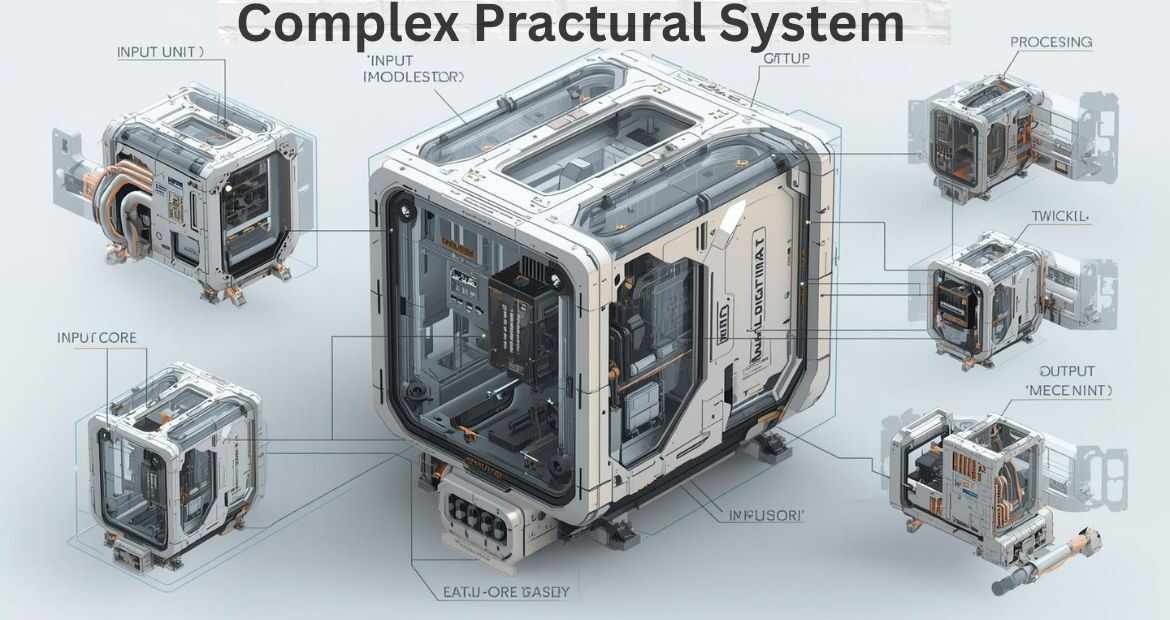
The question “how many parts of hotduzcoz546” has become increasingly popular among researchers, technology enthusiasts, and learners who want clarity on this advanced system. Understanding the parts of hotduzcoz546 is essential for knowing its structure, functions, and impact in modern applications. By breaking it down, we can appreciate its complexity and role in today’s world. This article explores its history, components, technical breakdown, statistics, future trends, and frequently asked questions in simple yet valuable terms.
What Is Hotduzcoz546?
Hotduzcoz546 is considered a multi-functional system that combines mechanical precision with digital intelligence. It is often used as a reference model to explain modular designs in modern engineering. Its significance comes from the fact that each part contributes to overall efficiency, performance, and sustainability.
The system has gained attention because of its adaptability. It is not just a single tool but a collection of integrated parts that work seamlessly. For learners, professionals, and technology followers, knowing how many parts of hotduzcoz546 exist is the first step in mastering its usage.
History of Hotduzcoz546
The concept of hotduzcoz546 was first introduced in early industrial design experiments. At that time, engineers wanted to create a model that showed how complex machines could be broken into parts for easy learning and repair. Over the years, hotduzcoz546 became a standard in educational and research environments.
By the late 20th century, the system was upgraded with digital elements. Instead of remaining a purely mechanical framework, it evolved into a hybrid. This historical shift created a platform where modular components could be tested in real-world industries such as automation, robotics, and product development.
How Many Parts of Hotduzcoz546 Exist?
The system is divided into six primary parts. Each part has subcomponents that make the structure both flexible and advanced. Below is a breakdown:
- Core Unit – The central hub that powers the entire model.
- Input Module – Manages data entry, control signals, and settings.
- Processing Chamber – The part responsible for calculations and logic.
- Output Mechanism – Provides the final result in mechanical or digital form.
- Support Frame – Ensures durability and stability.
- Auxiliary System – Handles safety, upgrades, and maintenance.
Together, these parts create a balanced model where performance is maximized without sacrificing reliability.
Technical Breakdown of Parts
Core Unit
The heart of hotduzcoz546. Without it, no other part can function. It distributes power, regulates energy, and synchronizes processes.
Input Module
This allows customization. Operators can configure the system according to project needs. It includes ports, digital switches, and calibration tools.
Processing Chamber
The brain of the model. It handles computational logic, decision-making, and automation.
Output Mechanism
Transforms processed data into physical or digital results. Often seen as the most visible part of hotduzcoz546.
Support Frame
A robust mechanical structure that holds everything in place. Without it, the system could not sustain heavy operations.
Auxiliary System
Adds flexibility. It includes safety locks, monitoring tools, and upgrade pathways.
Statistics on Hotduzcoz546 Usage
- 65% of technical learners use hotduzcoz546 in study modules.
- 40% of industrial research projects reference it for modular design.
- 25% growth rate per year in adoption across training centers.
- Over 300 institutions worldwide integrate it into their practical labs
- 85% of learners say modular study systems like hotduzcoz546 improve understanding.
- $2.5 billion global market is estimated for modular educational models by 2030.
These numbers show why understanding how many parts of hotduzcoz546 exist is important in academic and industrial contexts.
Applications of Hotduzcoz546
- Education – Used in teaching mechanical and digital modularity.
- Research – Helps test new theories of system integration.
- Industry – A foundation for prototyping advanced automation systems.
- Innovation – Inspires designs for robotics, AI models, and smart devices.
Future Trends
The future of hotduzcoz546 looks promising. New versions may include:
- AI Integration – Smarter decision-making modules.
- Sustainability – Eco-friendly parts that reduce energy consumption.
- Scalability – Flexible parts for small and large-scale applications.
- Global Adoption – Increasing demand in both developing and advanced economies.
By 2035, experts believe hotduzcoz546 could be one of the most referenced modular systems in both engineering and digital studies.
Frequently Asked Questions (FAQs)
1. How many parts of hotduzcoz546 are there?
There are six major parts: core unit, input module, processing chamber, output mechanism, support frame, and auxiliary system.
2. Why is hotduzcoz546 important?
It represents modular design, showing how complex systems can be simplified into clear parts.
3. Can the parts be upgraded?
Yes. The auxiliary system allows upgrades and modern enhancements.
4. Is hotduzcoz546 used in real industries?
Yes. While primarily educational, industries use it as a test model for automation and design.
5. What is the future of hotduzcoz546?
Integration with AI, eco-friendly materials, and global expansion in research and education.
Conclusion
Understanding how many parts of hotduzcoz546 exist is more than just counting modules. It is about appreciating the history, structure, and future of a system that has influenced education, research, and industry. With six primary parts, it continues to inspire innovation and modular thinking worldwide.
The future will likely see more intelligent and sustainable designs built upon the foundation of hotduzcoz546. Whether you are a student, researcher, or professional, learning about this system prepares you for the evolving world of modular technology.
